
NEW for 2026!
RELIANCE 57412 | 4-20 mA Analog Output Module for AutoMax Systems
$ 91.48
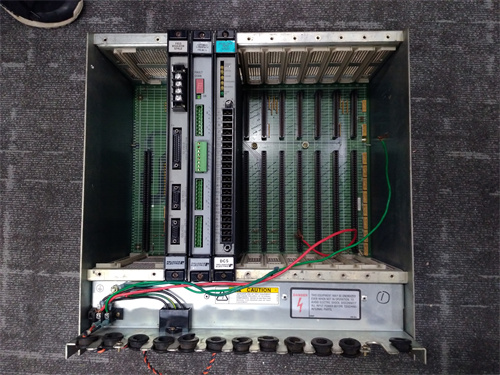
Description Key Technical Specifications Parameter Specification Model Number 57412 Alternate PN 41051-2R Channels 4 analog outputs Output Signal Range 4-20 mA (default), 0-20 mA, 0-10V (jumper selectable) Resolution 12-bit (0.024% of span) Accuracy ±0.25% of full scale at 25°C Load Resistance 0-600Ω (current mode) / >2kΩ (voltage mode) Output Drive ±10V compliance in current mode Isolation 500V channel-to-backplane, channel-to-channel Update Rate 10 ms typical (all channels) Power Supply 5V and 24V from AutoMax backplane Power Consumption 4W typical Indicators Module status LED, channel activity LEDs Operating Temp 0°C to 60°C Mounting AutoMax I/O rack (6U Eurocard) Product Introduction You’ve got an AutoMax system driving a 500 HP DC drive, and the speed reference is drifting. The RELIANCE 57412 is the 4-channel analog output module that sends those 4-20 mA signals to drives, valve positioners, and process controllers. It’s the workhorse of the AutoMax analog output family—four isolated outputs in a single slot, each configurable for current or voltage via jumpers on the board. The 12-bit resolution gives you about 4 µA per step on a 4-20 mA loop. That’s fine for drive speed control, marginal for precision valve positioning. If you need better than 0.25% accuracy, you’re looking at the wrong module. The 57412 lives in the AutoMax rack alongside processor modules, digital I/O, and communication cards. When one channel fails, the whole card comes out. No channel-level sparing. Common failure mode is the output driver chip—when a field short takes out the loop, the driver often dies trying to source current into a dead short. The module will power up, LED looks happy, but that channel sits at 0 mA or pegged at 24 mA. The other three might work fine, but you’re pulling the card anyway. That’s the density trade-off. Installation & Configuration Guide Phase 1: Pre-Installation Lock out the 24V DC field supply to the AutoMax rack. The backplane logic power ( 5V) stays live if you’re hot-swapping—AutoMax supports it, but not recommended unless you’re comfortable with arcs. Backup the AutoMax configuration from the programming terminal (DOS-based AutoMax Executive software). Note which output channels map to which drive or valve tags. Phase 2: Removal Label all field wiring at the termination panel (usually a 5716 or similar terminal strip). Take photos. The RELIANCE 57412 connects via ribbon cable to the termination panel—disconnect at the module end. Loosen the two captive screws at top and bottom of the front panel. Pull the module straight out. Rocking it bends the backplane pins—seen it happen. Phase 3: Installation Inspect backplane pins for damage. Straighten carefully if needed. Before inserting, verify jumper settings on the new 57412 match the old one. Jumpers select current/voltage per channel and output range. Wrong setting means 20 mA command becomes 5V or vice versa—drive runs away or valve slams shut. Slide module in until seated. Tighten captive screws finger-tight. Reconnect ribbon cable to termination panel. Phase 4: Power-On & Testing Restore 24V field power. Observe module LED: steady green means OK and communicating. Flashing means powered but no configuration. Connect programming terminal. Download AutoMax configuration. Then force each channel to 4 mA, 12 mA, 20 mA (or 0%, 50%, 100%). Measure at the termination panel with a milliamp meter. If a channel reads 0 mA with 24V present, check loop wiring—open circuit is common. If voltage is there but no current, output driver may be current limiting due to short. Isolate field device and test into 250Ω resistor. If it works, field device is the problem. Frequently Asked Questions (FAQ) Q: Can I use 57412 in an AutoMax Executive version 4.0 system? Yes, if the I/O rack is configured for analog outputs. The RELIANCE 57412 works with all AutoMax Executive versions that support the 41051-2R module type. Check your I/O assignment table in Executive—if 57412 is listed in the catalog, it’s supported. If not, you need a newer Executive version. Q: What’s the difference between 57412 and 57412A? The “A” suffix indicates a later hardware revision with surface-mount components instead of through-hole. Electrically identical. The “A” version runs slightly cooler and has better ESD protection. If your system has the non-A version, the 57412A drops in fine. You might see a “module type mismatch” warning in older Executive versions, but it clears on download. Q: The module works but channel 3 output is 2 mA low at 20 mA command. Calibration issue? The 57412 has no field-adjustable calibration—it’s all resistor networks. If one channel is consistently low, the output scaling resistors have drifted or the DAC channel is degraded. You can compensate in software: adjust the output scaling factor in the AutoMax configuration for that channel. If that fixes it, run with it. If the error changes with temperature, replace the module. Q: Can I hot-swap this module without stopping the process? Technically yes—AutoMax backplane supports live insertion. Practically, the outputs will go to 0 mA or 0V during the swap (open-loop condition). Drives will stop, valves will close. The process will bump. If that’s acceptable for 2 minutes, fine. If not, put those loops in manual or plan a brief outage. Q: All channels read 0 mA but module LED is green. What’s wrong? Check the 24V field supply first. The RELIANCE 57412 uses external 24V for loop power. If that supply is dead, outputs sit at 0 mA even though logic is happy. Measure 24V at the termination panel. If present, check the ribbon cable connection—pins can pull out of the insulation-displacement connectors. Reseat both ends. Q: One channel is pegged at 24 mA regardless of command. Output driver shorted. Usually the power transistor (or op-amp) failed short. That channel is done. If the loop is critical, move the wire to a spare channel (if available) and reconfigure software. Otherwise, replace the 57412. Don’t run with a pegged channel—it’ll drive the actuator to full scale, which could be dangerous. Q: What’s the maximum distance from module to field device? For 4-20 mA, loop resistance limits distance. The 57412 compliance voltage is ±10V, meaning it can drive up to 10V into the loop. With 250Ω burden (typical input resistance), that leaves about 7V for wire resistance at 20 mA. That’s about 3500 feet of 18 AWG (roughly 12Ω/1000ft round trip). Beyond that, use a signal conditioner or increase wire gauge. Q: Is the 57412 compatible with AutoMax Redundant systems? Yes, but with caveats. The 57412 can be used in redundant racks if the application handles output arbitration at the software level. The module itself doesn’t support hardware redundancy—you need two modules, two separate field connections, and logic to select which output controls the actuator. Typically done with AutoMax Redundant Executive and external transfer relays. EMERSON 4D33888G01 EMERSON 4D33900G19 plc EMERSON 4D33934G01 EMERSON 4D33935H01 PLC Email: [email protected] Phone: 86 15340683922 Sales:Wu Jiedong Our products are guaranteed for 1 year, with new and original production stopped and imported spare parts. All prices listed on the official website are subject to confirmation by contact: Wu Jiedong (manager). Our product: brand new original packaging Our warranty: All new or repaired parts have a 12 month warranty period beginning Our payment: 100% telegraphic transfer of inventory items before shipment, conditions can be proposed! If you have any downtime spare parts that you cannot find, please feel free to call or use email to contact me. If there are issues that the product cannot solve, please contact me. Product prices can be negotiated. Please do not consider contacting me!
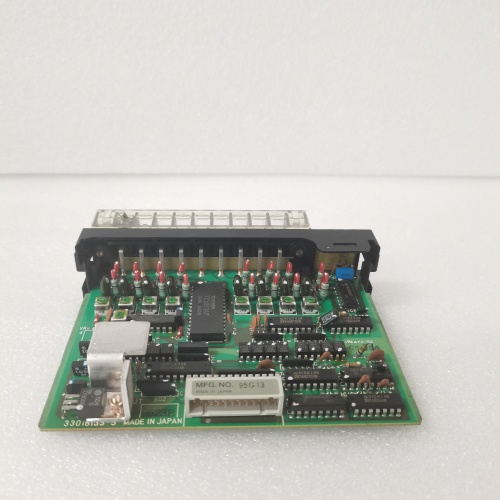 RELIANCE ELECTRIC 0-60031-5
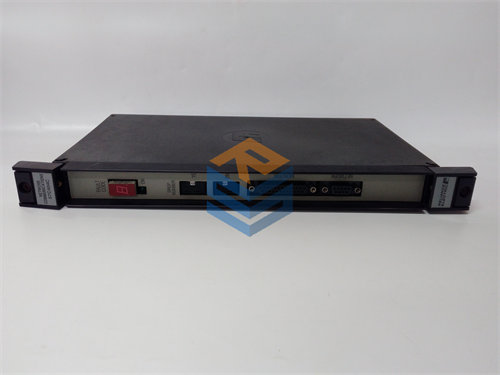 RELIANCE 0-57C408-B S-D4009-D
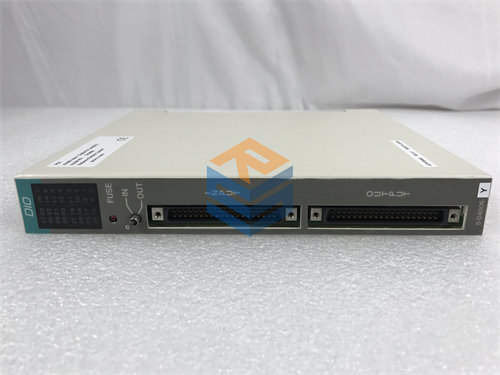 RELIANCE S-D4006 0-60063-2